

Late-stage check · Heat
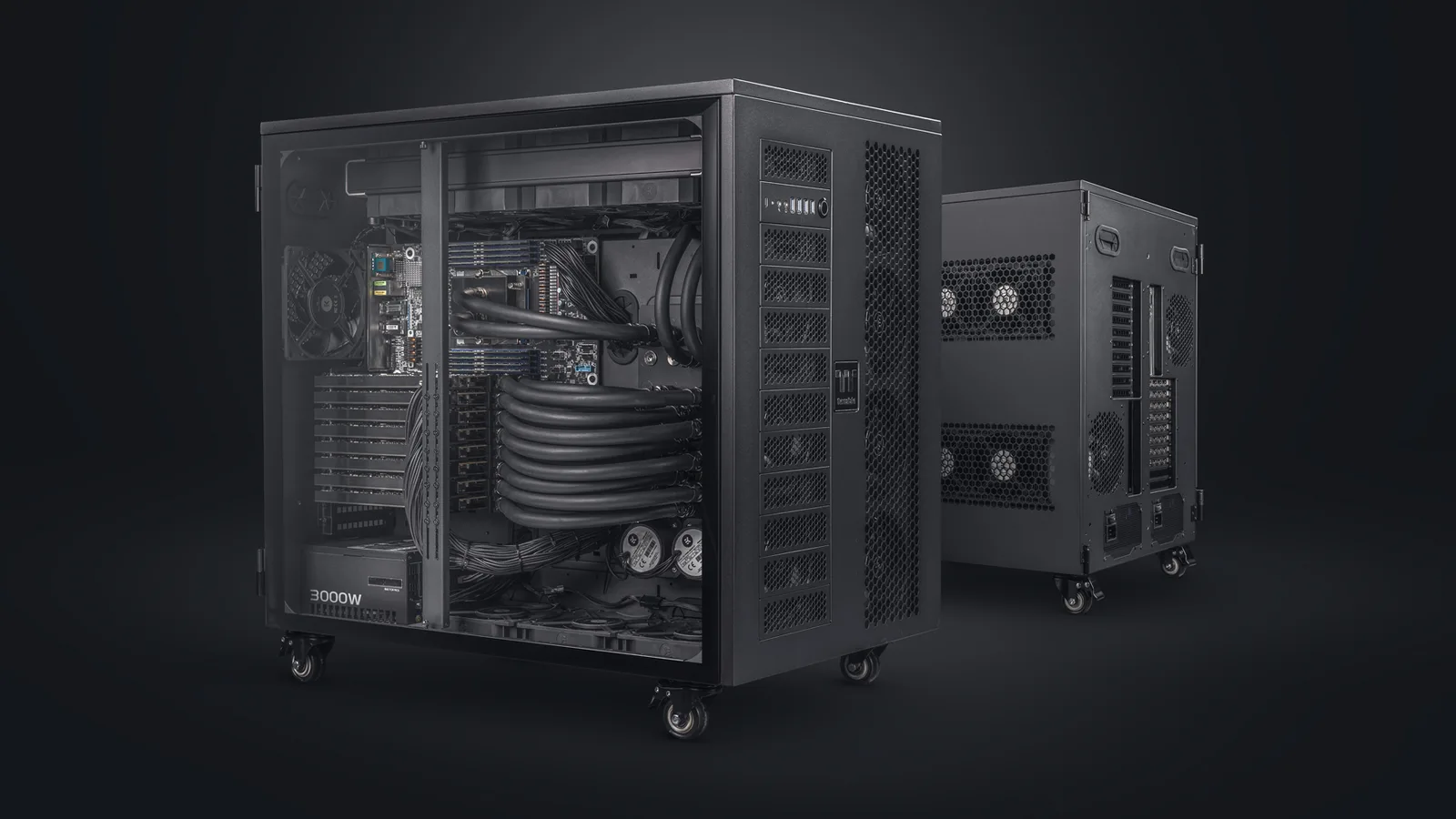
GPU servers are not like your old servers.
Plan the heat first.
Your room was built for application servers, storage and switches. Eight GPUs in one 4U server are a different heat load.

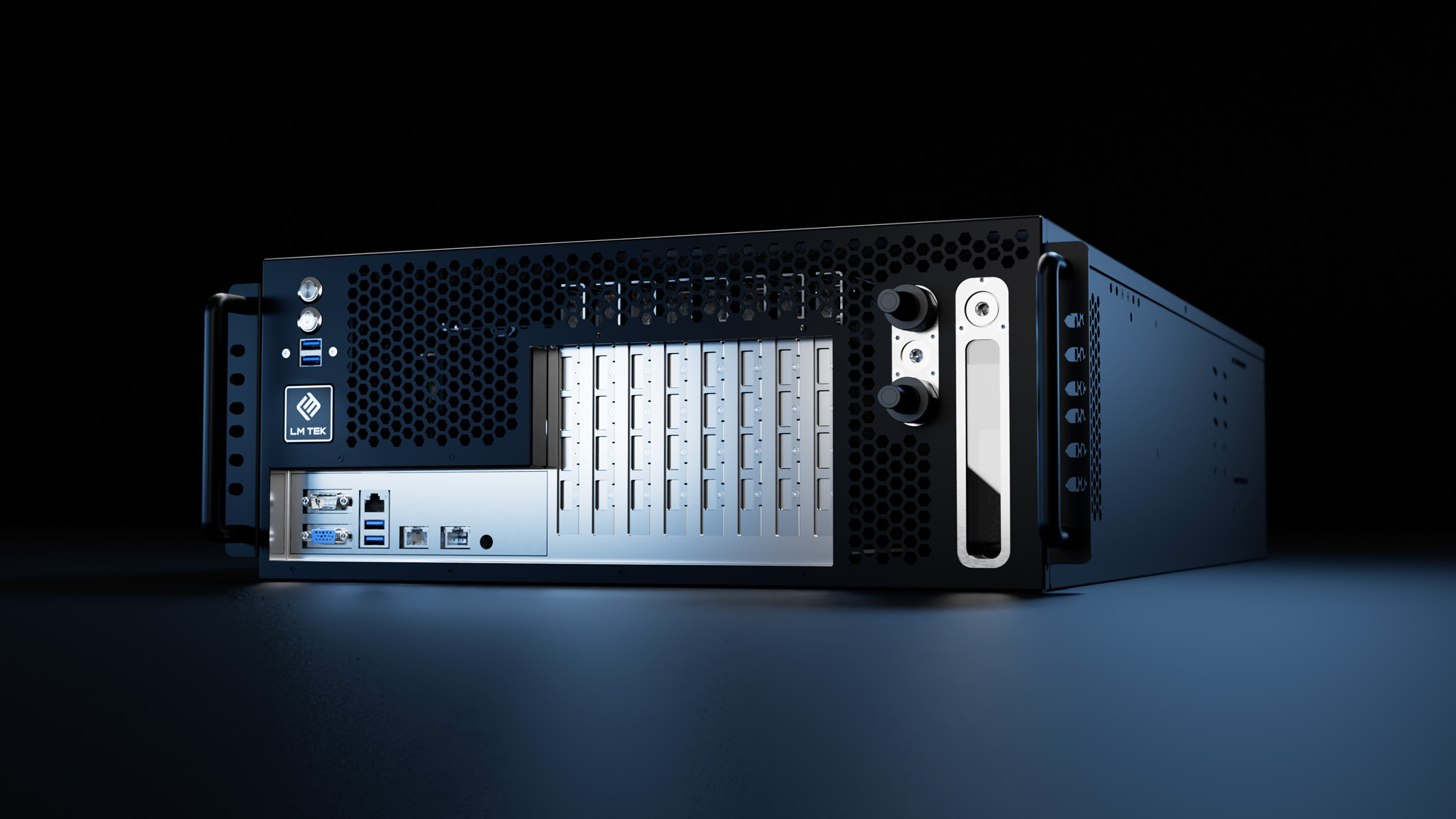
- LM TEK 4U8GPU10KW
- 8 × full-height PCIe Gen 5
- 4U · 19-inch rack
- 5 × 2 kW with redundancy
- 5 – 30 °C ambient · 5 – 60 °C coolant
- No facility plumbing · no external CDU
Heat math
One GPU server adds 2 – 7 kW to your room.
Every watt a server draws ends up as heat in the room. 7 kW of power is 7 kW of heat.
Application servers, storage, networking, security appliances and the UPS each draw around 200 – 400 W. Together, a mid-size company usually cools about 2 – 4 kW of hardware.
GPU server shown at 7 kW, the top of the range. Striped: the room's own range, 2 to 4 kW.
-
Double or triple heat output.
A single GPU server doubles or triples the heat your room has to remove.
-
Check your A/C.
You will likely need to upgrade the room's cooling before the server arrives.
-
Efficiency counts.
Every bit of efficiency in the server is load your room does not have to carry.

Who we are
We specialise in liquid cooling.
So that servers and workstations can operate at their full capacity in normal business environments.
LM TEK 4U8GPU10KW server tested on full load at 30 °C and runs in server rooms just like yours every day
Extended-duration test (reference data, not a rating). LM TEK in-house testing of one eight-GPU configuration in a controlled environment. 80 hours at 22°C ambient: GPU temperatures 65–73°C, about 6.0 kW at the wall. 2 hours at 30°C ambient with each GPU at 600 W: GPU temperatures 76–81°C, 6.3 kW at the wall, coolant 58.4°C against the 60°C coolant shutdown. A realistic extended-duration test, not a rating or a guarantee.
Wherever test results are shown: they come from LM TEK in-house extended-duration testing of one eight-GPU configuration in a controlled environment. They are realistic reference data, not a rating, a specification or a guarantee; temperatures and power draw in use depend on the chosen components and ambient conditions. The rated operating envelope is 5–30°C ambient and 5–60°C coolant.
What a temperature rating means
Plan for the hottest day.
Outside temperatures shape how you manage the room your server lives in. Plan for the hottest week of summer, not an average day.
What a temperature rating means · ASHRAE ranges
Operating is not performing.
A server that reaches its temperature limit keeps operating, but it reduces its own clock speeds: it gives up performance to keep running. What you want is a server that gives you all the performance you paid for, at a specific ambient temperature.
-
Allowable · up to 35 °C
It operates.
A server rated for ASHRAE A2 is built not to fail at 35 °C. Near its limit, it lowers its own clock speeds to keep running.
-
Recommended · 18 – 27 °C
It operates reliably.
ASHRAE's range for reliable operation. Even this is not framed as a promise of full performance.
-
The question to ask
Does it perform?
At what ambient temperature does the server deliver all the performance you paid for? Ask every quote, ours included.
Where liquid helps
Liquid cooling moves heat more efficiently than air. In our in-house test at 30 °C ambient, the LM TEK 4U8GPU10KW performed at maximum load.
Source: ASHRAE Thermal Guidelines reference card (recommended 18 – 27 °C, A2 allowable 10 – 35 °C). Operation of the LM TEK 4U8GPU10KW above 30 °C ambient is not supported.
We're here to help
Not sure yet? Let's talk.
GPU servers bring many new, complicated decisions, and they cost too much to be sloppy with.
Tell us what you're planning. We'll arrange a short call to help you understand the decision, or recommend an integrator partner. Our partners install servers every day.