
When the data
can't leave the building.
For some workloads, sovereign deployment is not a preference - it is the only viable architecture. This page is for organisations whose AI deployment must handle personal data, intellectual property, confidential financial records, regulated healthcare information, or classified research. The data classes that force sovereign, the regulatory frameworks that make it non-negotiable, and the architectural choice this implies.
Six data classes where on-premises is the only defensible architecture.
These are not abstract categories. They are data classes that organisations encounter routinely and that materially constrain how AI processing can be done. If your deployment touches any of them, the architectural conversation starts and ends with sovereign infrastructure.
Data class 01
Personal data (PII) under GDPR
Any data identifying or relating to an individual - names, emails, IDs, behavioural records, location data, health markers. Article 6 requires a lawful basis; Article 28 binds processors to controllers; Article 35 mandates a DPIA when AI processing creates "high risk to rights and freedoms" (which it routinely does). Foreign-hosted AI services move processing to a third country and trigger Article 44 transfer obligations that are difficult to satisfy without sovereign infrastructure.
Data class 02
Trade secrets and intellectual property
Source code, proprietary documents, M&A drafts, pre-release product information, customer lists, pricing models. None of these can be exposed to a generic-cloud LLM - once a model has seen them, the data has left the organisation's control. Sovereign deployment is the only architecture where you can prove with audit certainty that the model did not learn from your secrets.
Data class 03
Confidential financial and strategic data
Board materials, M&A working files, regulatory filings in draft, audit working papers, MNPI under MAR. The confidentiality regime here is not just contractual - it is regulated. Sovereign deployment ensures that processing happens inside the controlled perimeter where the rest of the data already lives.
Data class 04
Regulated healthcare and biomedical data
Patient records, genomic data, clinical trial datasets, biospecimen registries. EU healthcare confidentiality is governed by GDPR Article 9 (special-category data), national health-data legislation, and increasingly by EHDS regulation. AI processing of healthcare data outside controlled infrastructure is rarely defensible.
Data class 05
Classified or export-controlled research
Defence research, dual-use technologies under EU Regulation 2021/821, classified academic work, certain HORIZON projects with sovereignty clauses. Cloud-hosted AI is generally a non-starter; sovereign deployment is often a contractual requirement of the funding instrument itself.
Data class 06
Customer data under NDA or DPA
Data your customers entrusted to you under contractual confidentiality. Whether or not it contains PII, your obligation to them prevents you from handing it to a third-party AI service whose own data-processing terms may conflict with your DPA. Sovereign processing inside your perimeter is the only architecture that fits the contract.
What "sovereign" actually means at the deployment level.
The word "sovereign" is overused. Cleared of marketing, it points to four concrete deployment commitments. Data residency - the physical location of the storage and processing infrastructure, in a jurisdiction the organisation controls or trusts. Jurisdiction - the legal regime that applies to the infrastructure operator and to lawful-access requests. Vendor access - who, beyond the operator, can technically see or pull the data, including support staff, sub-processors, and government request channels.
And - this is the one most often missed - model and weights provenance. The same workload running the same prompt against an open-weight model on your hardware versus a hosted API on someone else's hardware does not produce the same legal exposure. The model weights matter because they define what the model could have learned from, what the operator can audit, and what happens to the model after the contract ends.
A deployment that satisfies all four is sovereign. A deployment that satisfies three of four is partial - and partial sovereignty is rarely defensible to a regulator who is asking the awkward fourth question.
Cloud / API vs sovereign / on-premises - honestly compared.
Cloud / API-based AI
Lower friction, more constrained scope
- Cheaper to start. Pay-per-token, no capex, no facility commitment.
- Faster to pilot. Hours not weeks from first call to working prototype.
- Constrained data scope. Acceptable for non-sensitive data. Increasingly unacceptable for the six classes above.
- Lock-in risk. Provider terms, model updates, deprecation timelines outside your control.
- Compliance overhead is contractual. Your DPIA, your DPA, your transfer-impact assessment - all dependent on the provider\'s posture.
Sovereign / on-premises AI
Higher friction, broader scope
- Higher upfront cost. Capex investment, facility planning, in-house or partner ops.
- Slower to pilot first time. Weeks not hours; once running, the next workload is fast.
- Full data scope. All six sensitive data classes are in scope. The architecture does not constrain what the AI can be used for.
- No lock-in. Open-weight models you choose, hardware you own, evolution on your timeline.
- Compliance overhead is technical. Demonstrably under your control, auditable, and structurally aligned with the regulatory frameworks above.
The choice is not "which is better." It is "which fits the data class." For sensitive data, sovereign is the only viable architecture. For non-sensitive data, cloud is often the right call. Many organisations end up running both - sovereign for sensitive workloads, cloud for everything else.
Without controlled hardware, the rest of the sovereign argument is rhetoric.
The hardware platform is the foundation that makes the data-residency commitment physical. Models and prompts are software; software runs on hardware; if the hardware sits in a facility you do not control, the sovereign claim is qualified at best.
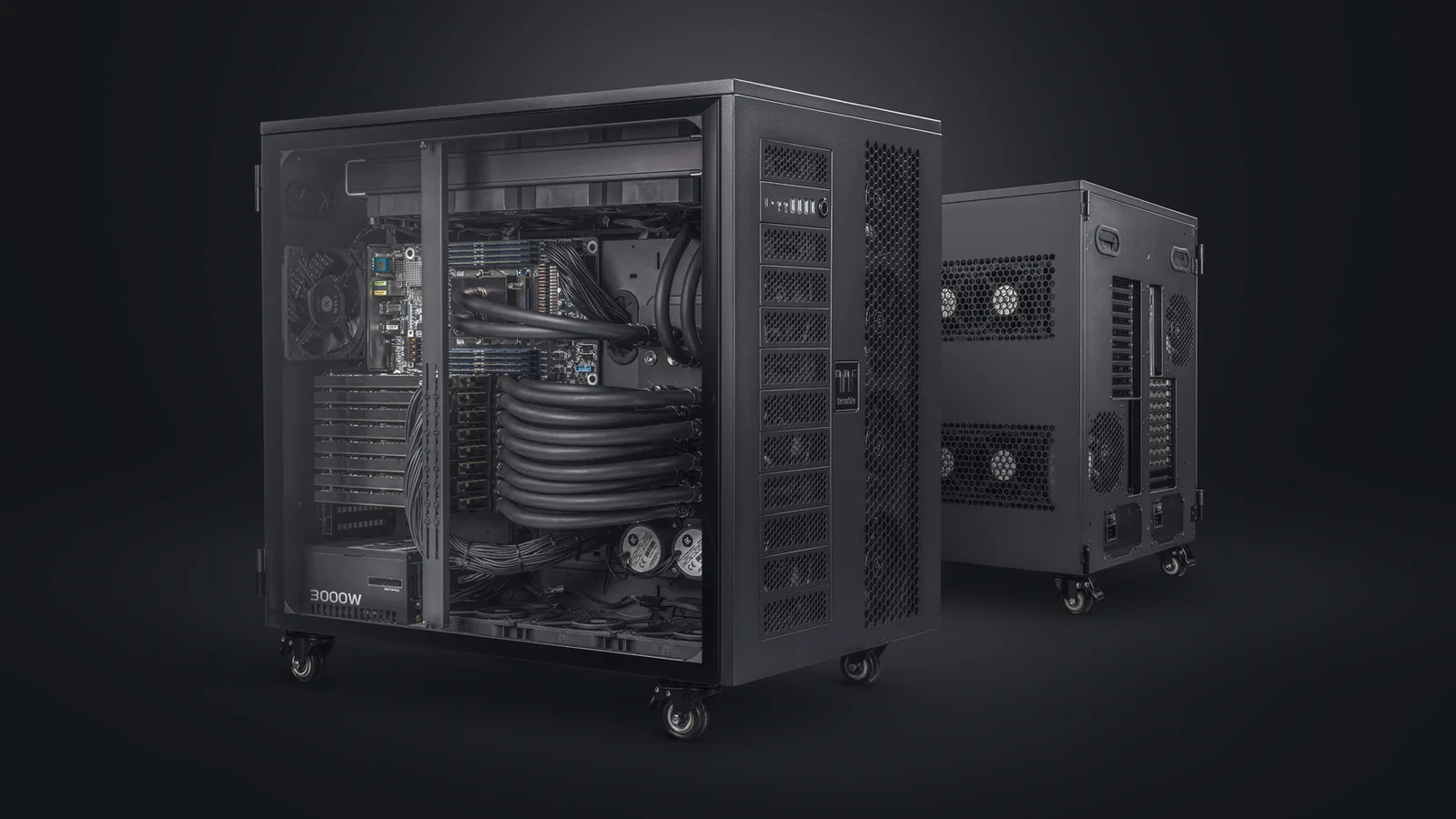
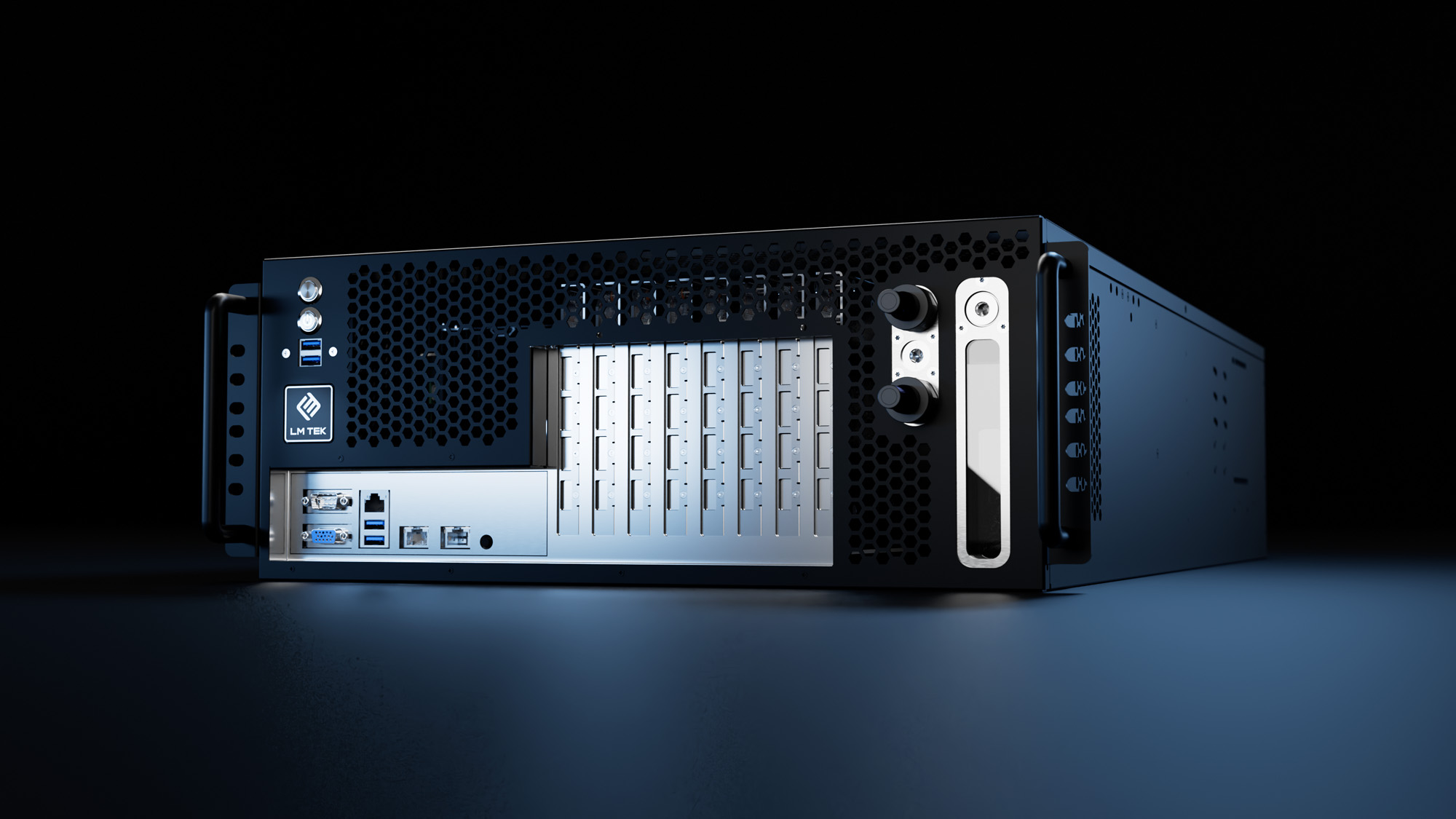
LM TEK builds the hardware platform that anchors sovereign deployments at the silicon level. EU-engineered, EU-manufactured, deployed inside your perimeter. The rest of the stack - your models, your data, your operations - sits on top, where you can prove control end to end.
See the platform// The sovereign stack
your data
↑ never leaves the building
your operations
↑ run by your team or your partner
your models
↑ open-weight, self-hosted
your hardware
↑ LM TEK · EU-engineered, in your rack
your jurisdiction
Sovereign deployment for sensitive data?
Tell us about the data classes in scope, the regulatory frameworks you are operating under, and where you are starting. We will recommend the hardware specification and partners suited to your compliance posture.