
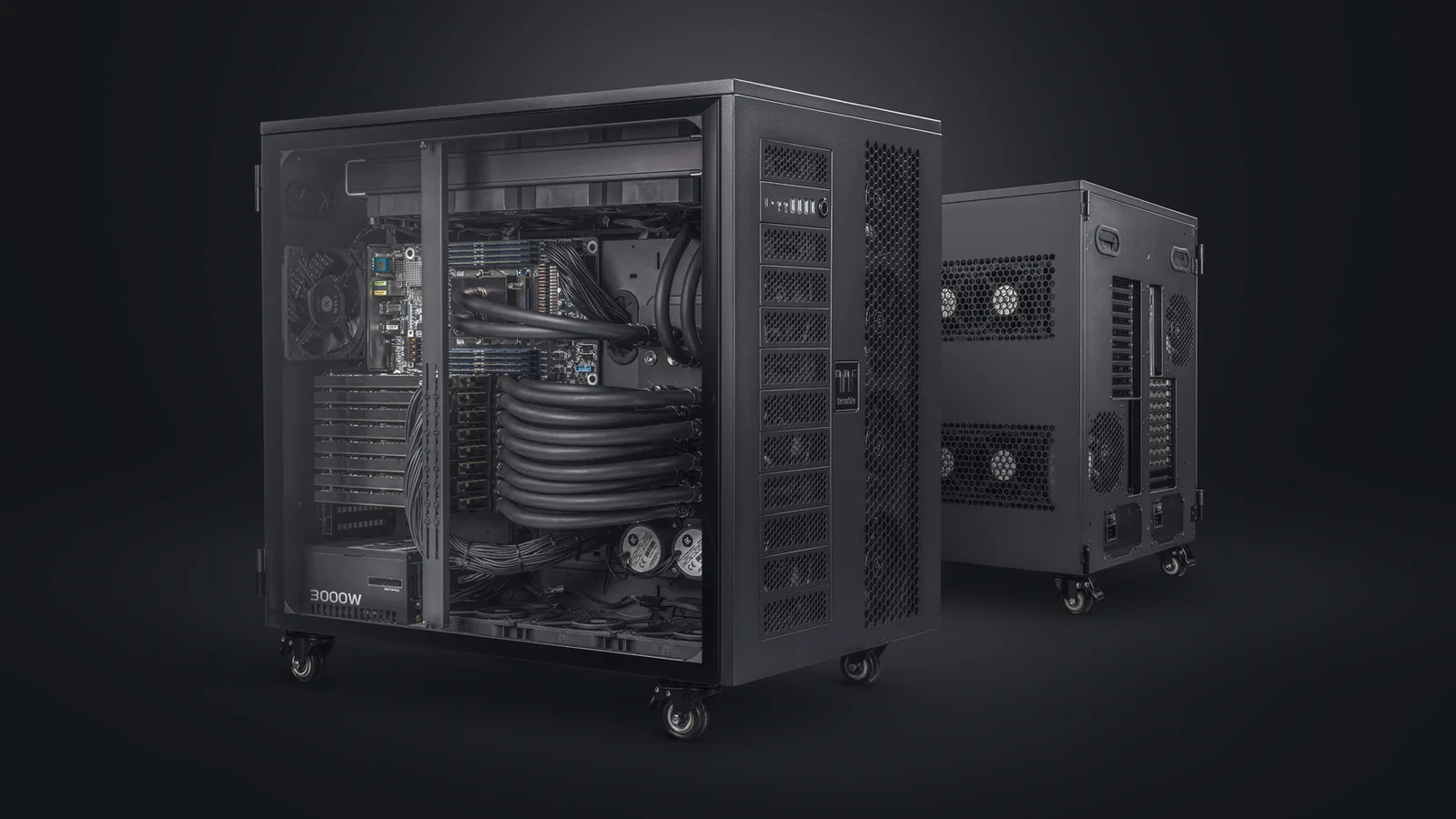
Deploy in the server room you already have.
The platform deploys at single-server or small-cluster scale: one unit in an existing rack, or several as a compact GPU pool, without facility changes.
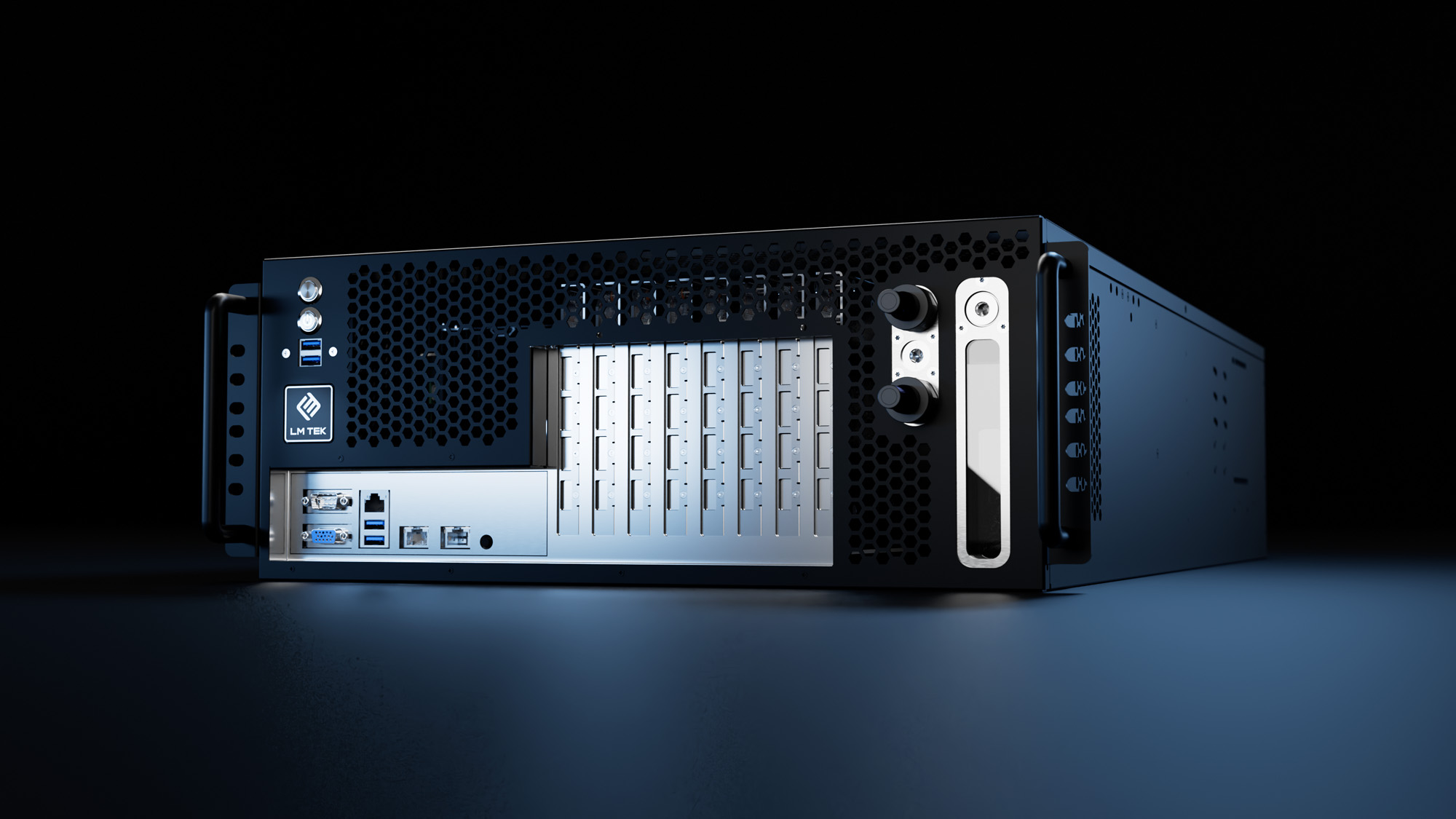
A barebone platform: LM TEK supplies the chassis, the integrated cooling loop, and platform-level power. You specify the board, CPUs, GPUs, memory, and storage.
- Ambient, standard server room
- 5–30°C
- Coolant
- 5–60°C
- No facility plumbing
- No CDU
- Sustained chassis maximum
- 8000 W
A standard server room, stated precisely.
Eight full-height GPU slots in a four-rack-unit chassis is density that normally needs 6U or 8U. The closed in-chassis loop and in-chassis radiator mean it deploys without facility plumbing or an external CDU.
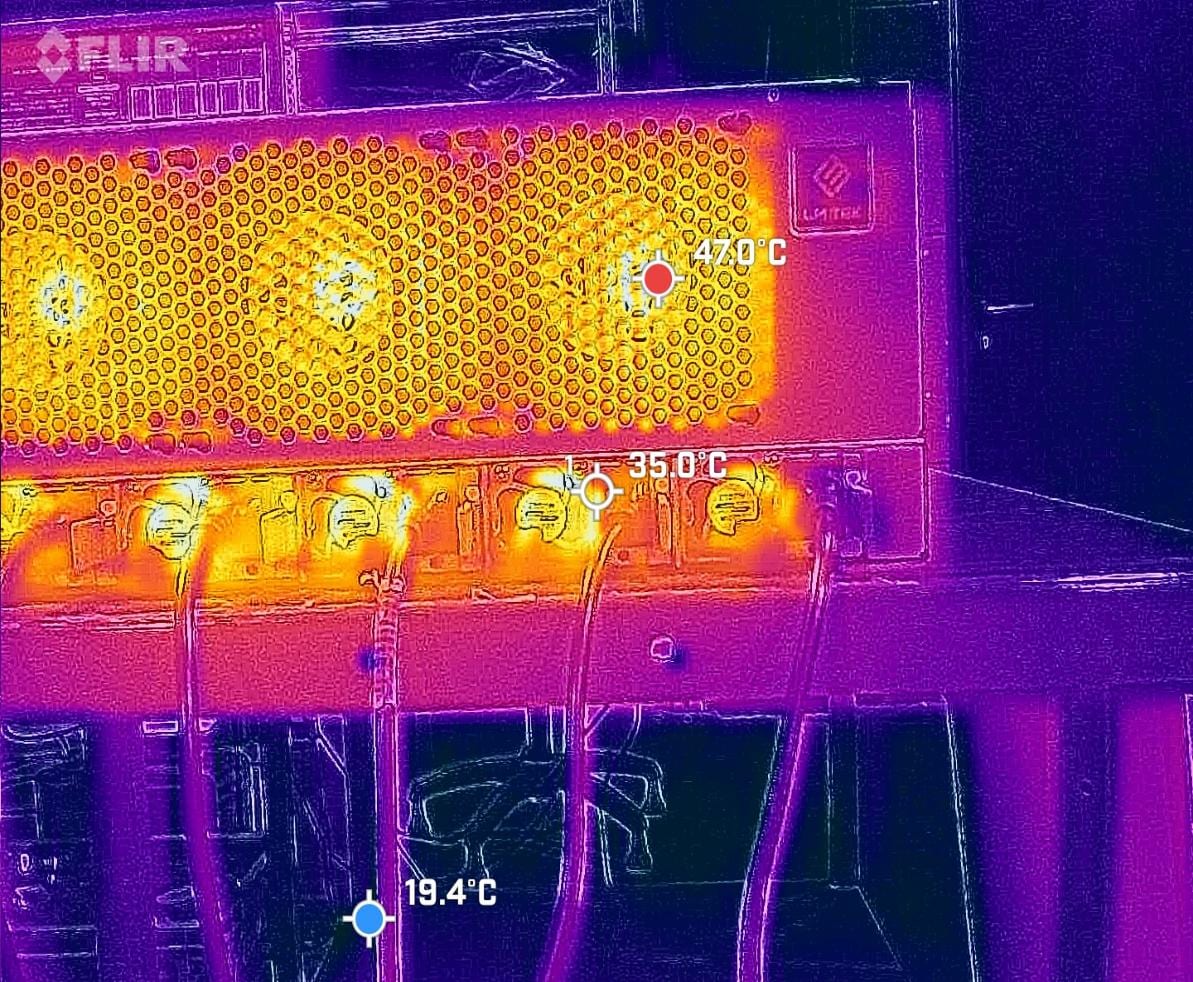
The claim is precise: no facility plumbing and no external CDU, in standard server-room conditions of 5 to 30°C ambient. In LM TEK torture testing at 30°C ambient, GPU package temperatures held at 76 to 81°C, inside the envelope a real server room can offer.
The conditions
- Deploys in standard server-room conditions: 5 to 30°C ambient, 5 to 60°C coolant.
- No facility plumbing. No external CDU.
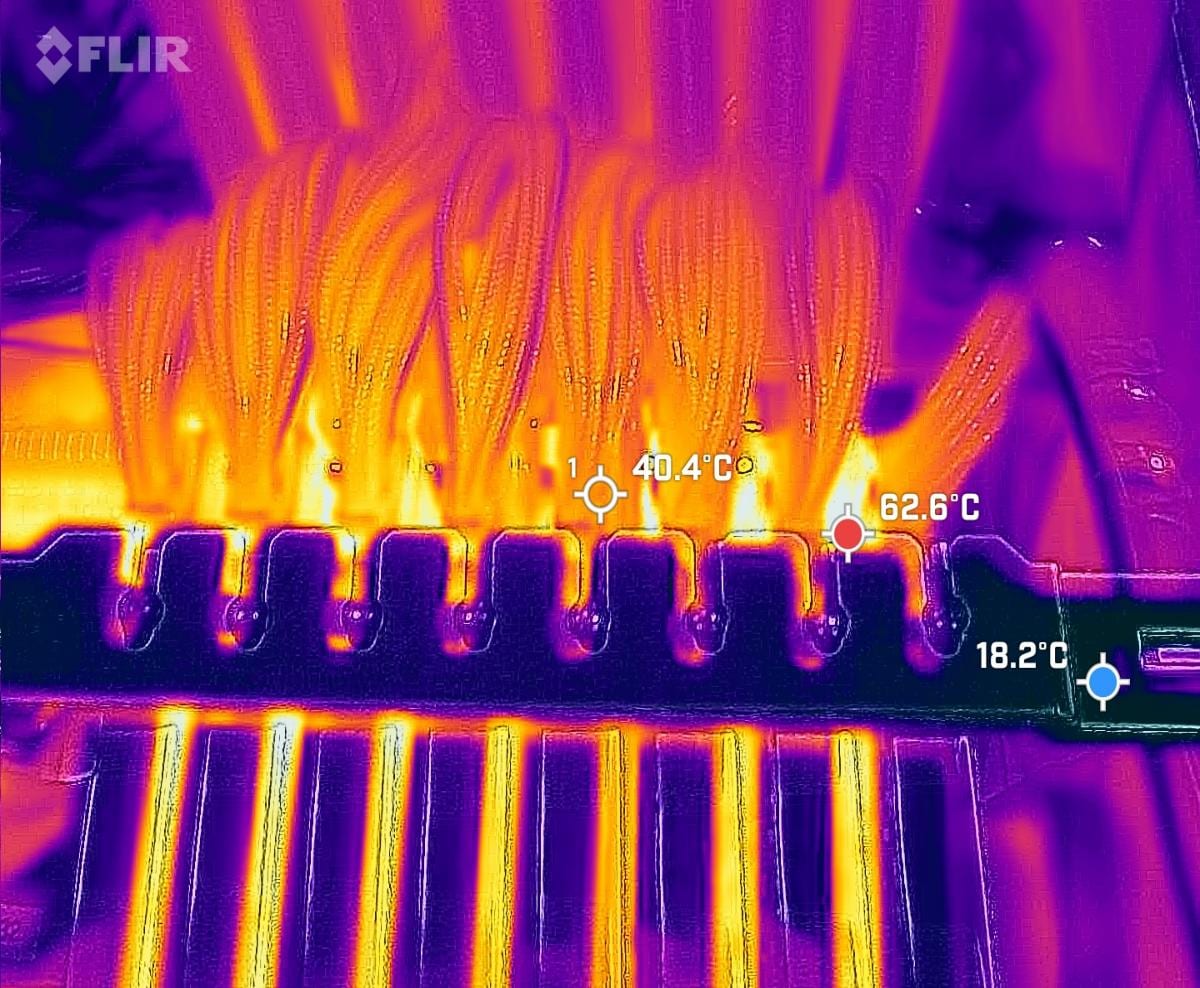
- Five 2000 W 80 PLUS Titanium PSUs with redundancy, up to 8000 W sustained.
- You still provision rack power and rack cooling headroom.
10 kW installed (5 × 2 kW); 8 kW sustained, N+1
Plan for the heat
A dense GPU server converts nearly all of its electrical draw into heat in the room. In LM TEK long-term endurance testing, a fully populated LM TEK 4U8GPU10KW measured 6800 to 7000 W sustained draw; that run has no written report yet. That heat load is defined by the GPUs and CPUs in the configuration, the same as any other max-spec 8-GPU server. Without added room cooling, ambient will rise under sustained load. The LM TEK 4U8GPU10KW’s operating envelope extends to 30°C ambient, so scope rack cooling for the configured load before deployment and keep the room inside that limit under sustained load.
Source: LM TEK long-term endurance testing.
Four checks for the room.
- 01 Verify rack power capacity before deployment. A fully-populated platform draws up to 8000 W sustained and requires adequate rack power provisioning.
- 02 Confirm rack clearance against the dimensional drawing (760 × 482 × 178 mm) before rack integration.
- 03 Operate within the stated envelope: 5–30°C ambient and 5–60°C coolant. Operation outside this range is not supported.
- 04 Ask engineering to review any requirement outside the published envelope.
Efficiency, and the water question
Power conversion uses 80 PLUS Titanium supplies, the highest rating in the certification; at multi-kilowatt sustained draw, conversion losses are a real operating cost and an increasingly common bid and tender criterion. And the water objection to AI infrastructure does not apply here: the loop is closed, filled once at assembly with engineered coolant, and consumes no water in operation. There is no facility water connection to consume from.
Specifications and measured evidence.
Scope rack power and cooling before the platform arrives.