
Rack-class compute without a server room
Built around the workloads you plan to run, and upgradeable to eight GPUs: the same eight-GPU compute as our rack server, in a large professional chassis instead of a 4U enclosure. Free of the 4U envelope, the cooling is sized to hold the GPUs at full performance, at the volume of a running air-conditioning unit.
A barebone platform: LM TEK supplies the chassis, the integrated cooling loop, and platform-level power. You specify the board, CPUs, GPUs, memory, and storage.
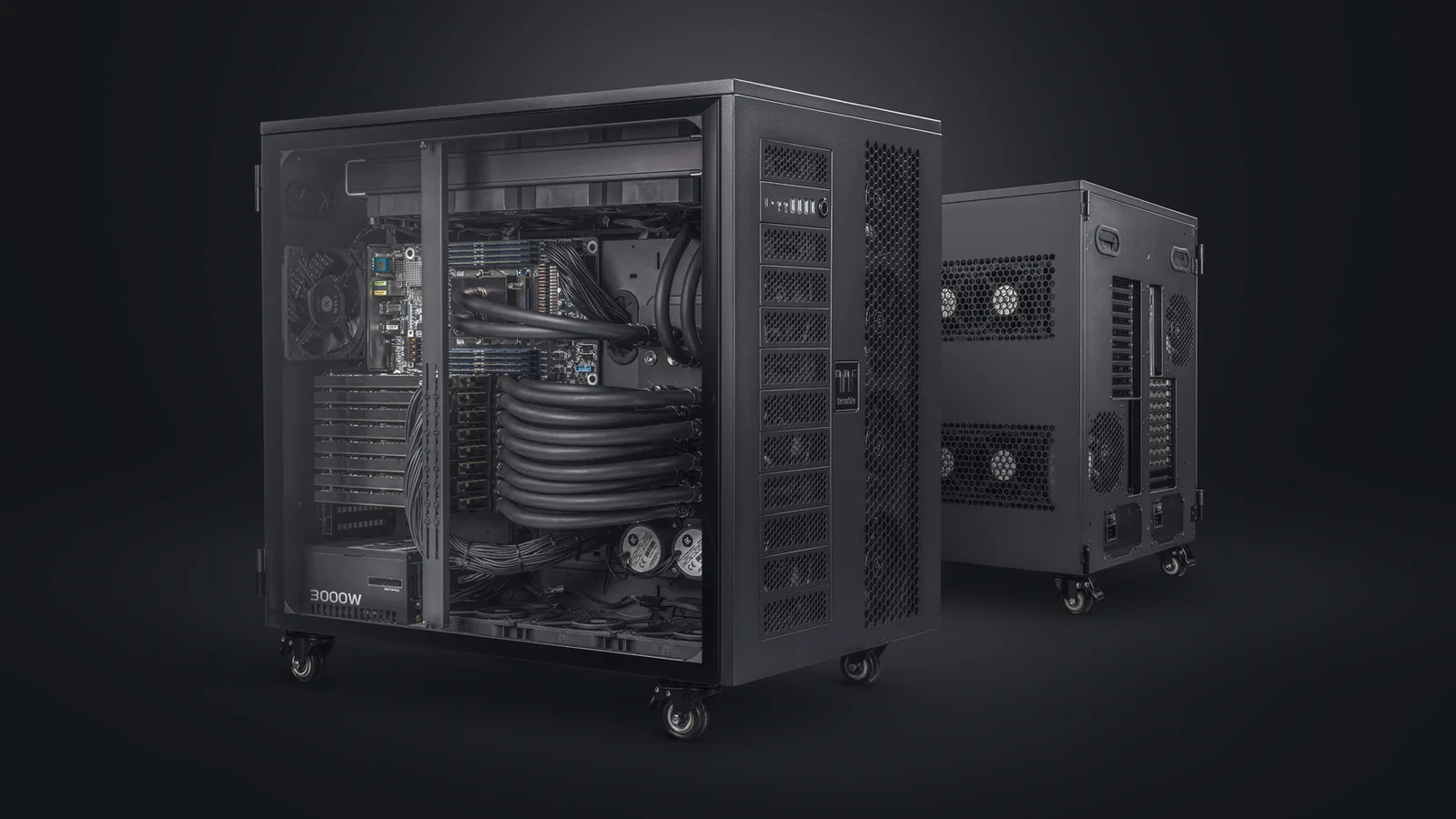
Free of 4U, the cooling scales
A rack server has to cool eight GPUs inside four rack units, so fan speed carries the load. A workstation has no such envelope: a larger chassis carries more radiator surface, and surface does the work instead.
-
The same compute
Up to eight GPUs per system, the same count as our rack server. Leaving the rack costs no GPUs.
-
Cooling sized to the job
Radiators and fans are added until every GPU holds full performance under sustained load, and the chassis is chosen to carry them.
-
Surface, not fan speed
More radiator surface lets the fans turn slowly. Fan speed is where noise comes from; surface area is what replaces it.
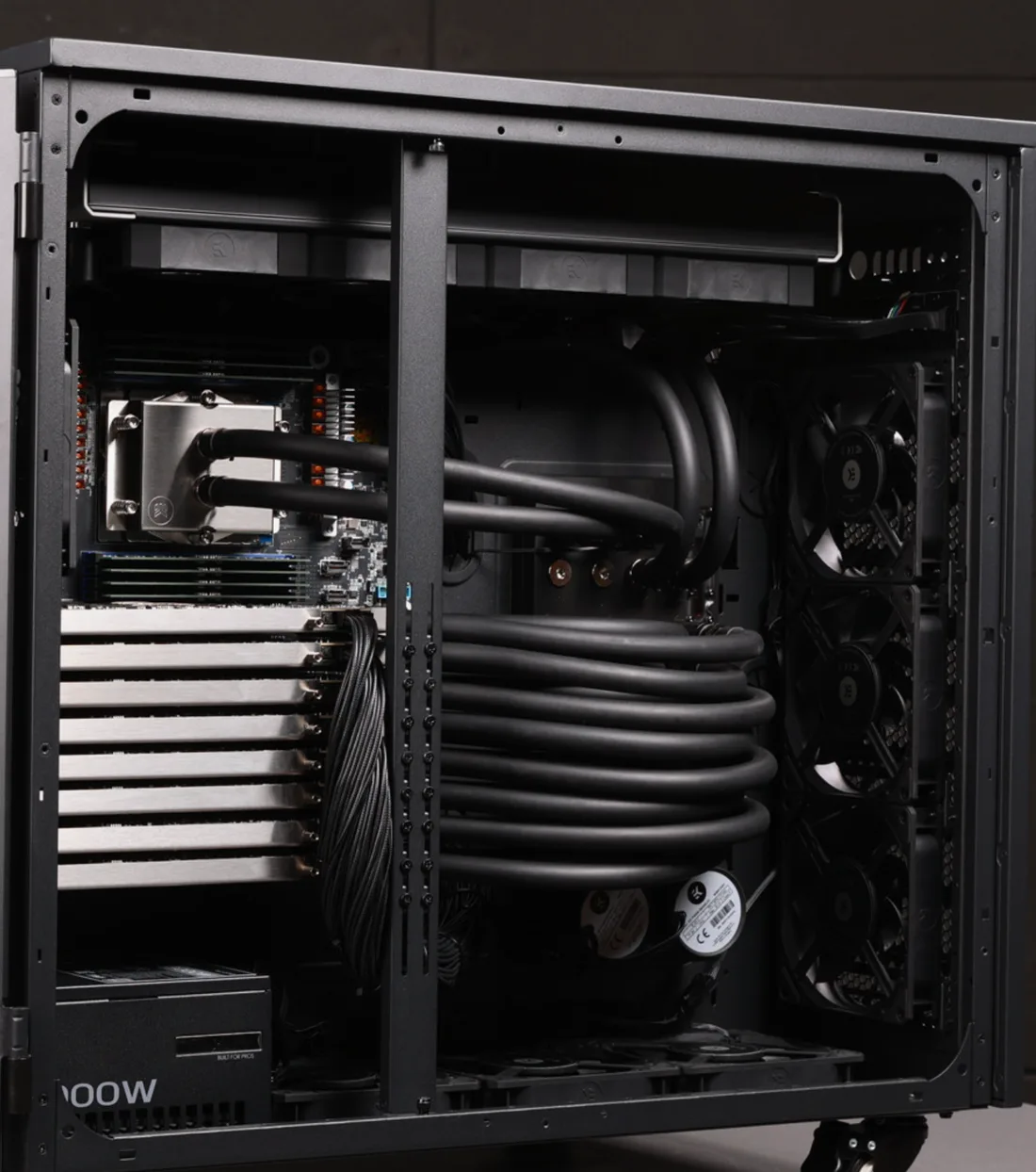
Tested at the top of the range
We built the top of the range, eight NVIDIA H200 NVL, and ran it at full HPC load in a 22°C room beside our eight-GPU rack server under the same load.
Why eight? The platform is designed to take openly available enterprise components, and eight GPU slots is the most any openly available motherboard offers. The motherboard set the top of the range we could test.
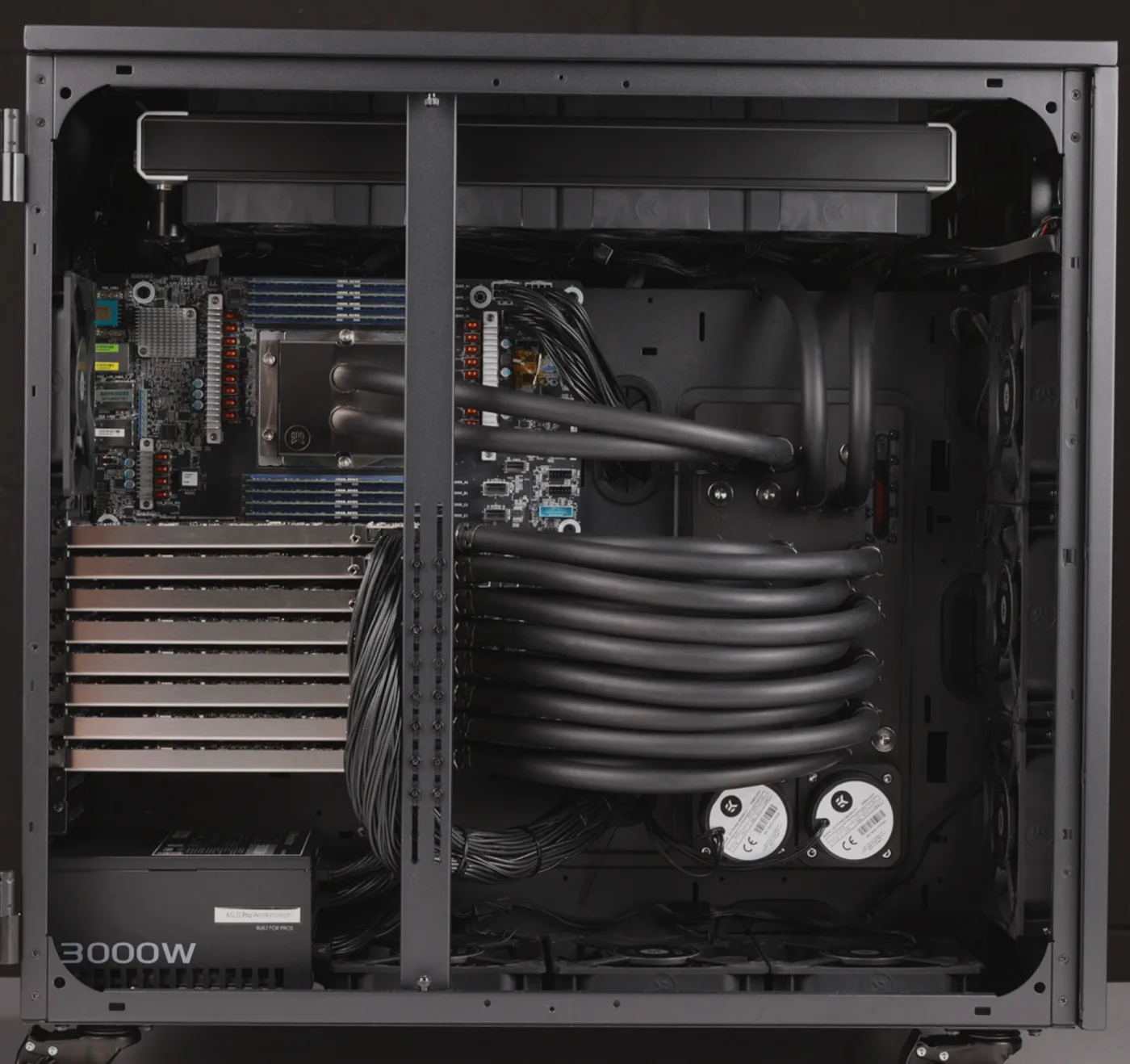
Side by side with our rack server
Identical eight-GPU HPC load, 22°C ambient. Single reference build. The full table, including where the workstation gives ground.
| Measurement | Workstation | Rack server |
|---|---|---|
| CPU temperature | 61°C | 62°C |
| GPU temperature (max) | 74°C | 74°C |
| GPU temperature (min) | 72°C | 69°C |
| DRAM temperature (max) | 48°C | 34°C |
| DRAM temperature (min) | 42°C | 32°C |
| Noise level | 59.6 dB | 76.9 dB |
| Fan speed at load | 1400–1500 RPM | 7500 RPM |
- Cooling
- All eight GPUs held below their throttle point, at the same 74°C maximum GPU temperature as the rack server.
- Noise
- 59.6 dB against 76.9 dB: the volume of a running air-conditioning unit. On both machines the peak is set mostly by the power supplies at maximum load. We are working to lower it further, but we are close to the point where further reductions stop being noticeable.
- Where it gives ground
- Memory (DRAM) runs warmer than in the rack server, 48°C against 34°C maximum. It is the visible cost of low fan speeds, and we publish it.
- Conditions
- One reference build at full HPC load and 22°C ambient. Results vary with configuration, workload and environment.
Questions about the test, or about sizing your own build? An engineer can take you through it.
What every build shares
Every workstation is built for the workloads you plan to run, on one model and one engineering approach. The density you size for changes the parts, not who supplies them.
LM TEK
LM TEK supplies
-
A large professional chassis
One of several off-the-shelf chassis, chosen for the density you size the build for, with room for the radiator surface it needs.
-
The complete liquid-cooling loop
CPU and GPU water blocks, pumps, reservoir, radiators and tubing, engineered as one loop for that chassis.
-
Platform-level power
Power supplies sized to the build, stated as installed capacity with the number of supplies. Workstation power carries no redundancy, so plan site electrical capacity early.
You
You or your partner supply
- Motherboard
- CPUs
- GPUs
- Memory
- Storage
An LM TEK partner completes the configuration and delivers the system.
Why does density decide the chassis? Radiator surface, airflow path, power supply headroom and loop geometry all grow with the GPU count, so each build is engineered around a chassis large enough for the density it is sized for.
Size for where your workloads are going
There are several chassis to choose from. The GPU count you size for decides which one, along with the radiator surface and the power, and a build can grow up to that count later.
Tell an engineer what you plan to run and how far you expect to grow. We size the chassis, the cooling and the power around it.
-
01
Approximately two GPUs
For a team that needs dedicated local compute for development and smaller models.
Typical work: Model development and fine-tuning, CAD & CAM, GPU rendering and video post-production.
-
02
Approximately four GPUs
For larger models, or several people sharing one system.
Typical work: Training and inference on larger models, medical imaging, scientific visualisation and production rendering.
-
03
Up to eight GPUs, tested
The top of the range, tested with eight NVIDIA H200 NVL. For the densest work at workstation scale.
Typical work: Dense single-node HPC and training workloads, and simulation at research scale.
Our advice
Size for the density you will grow into
If you start with two GPUs but know you will grow to six, size the build for six on day one. Adding GPUs to a build sized for them means far less downtime than rebuilding the system in a different chassis.
Our advice
Plan the room for the heat
In an office, nearly every watt an eight-GPU build draws ends up as heat in the room. The platform is 6 kW installed (2 × 3 kW), without redundancy: installed capacity, not the expected draw. We made sure it runs at full performance and keeps the noise manageable; your room's air conditioning decides whether you can sit next to it.
Built for professionals in
Medical imaging
Volumetric reconstruction, AI-assisted diagnostics.
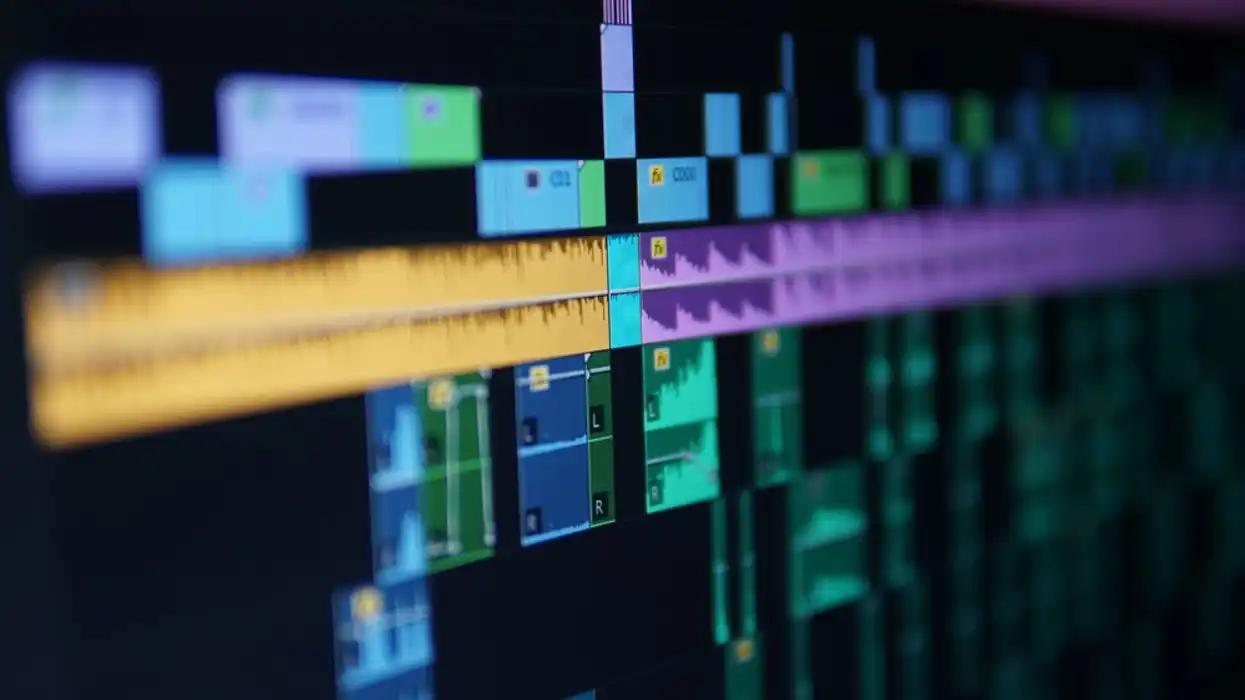
Video post-production
Uncompressed 8K timelines, real-time colour grading.
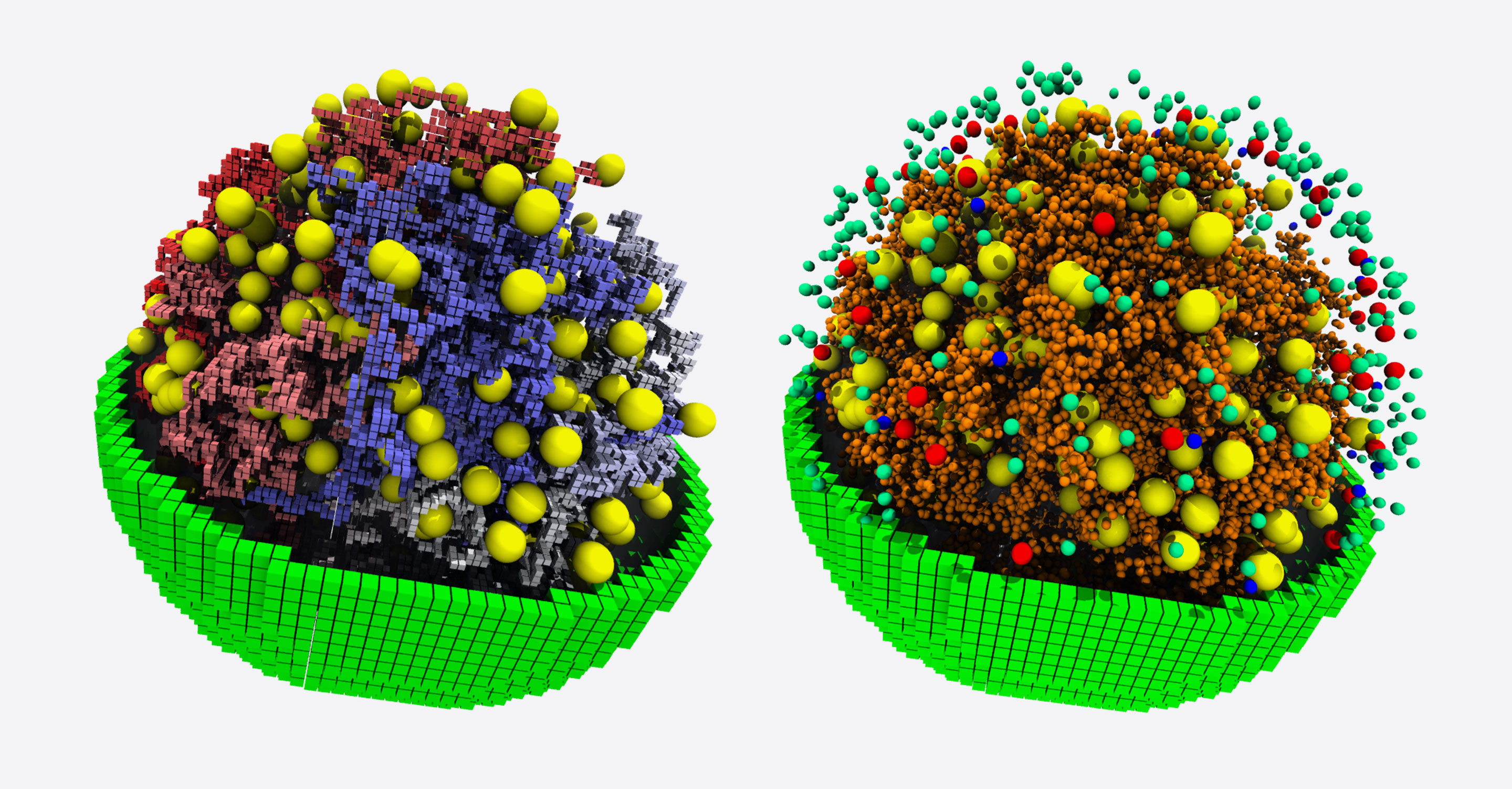
Scientific visualisation
Billion-cell simulation rendering.
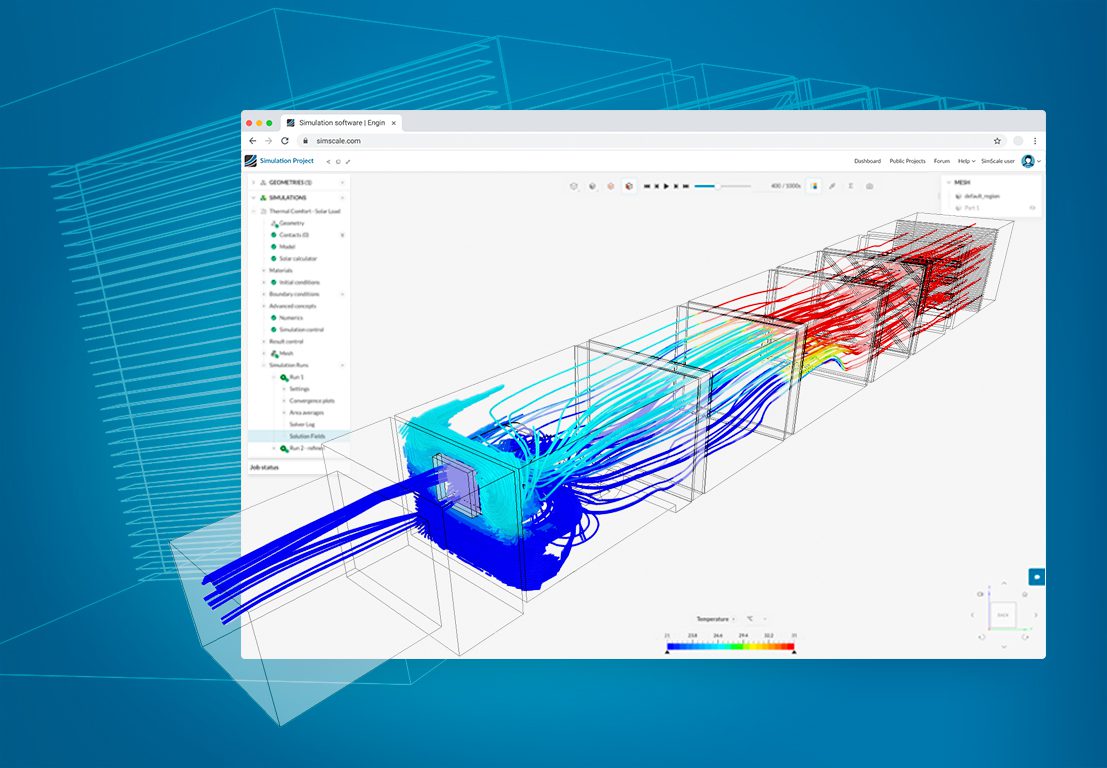
CAD & CAM
Large-assembly interactive design.
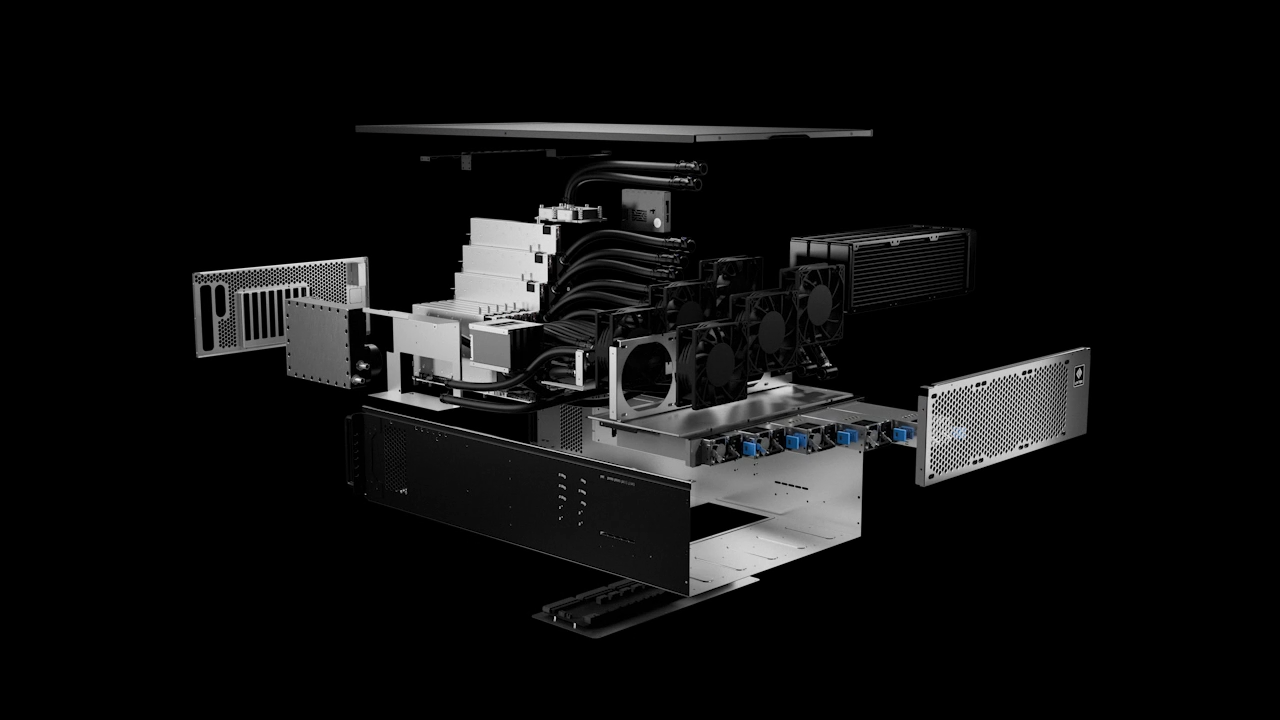
3D rendering
GPU-accelerated production rendering at scale.
Computational research
Dense single-node HPC and training workloads.
Have a machine room and rack space?
The rack platform complements the workstations: the same liquid-cooling approach and the same barebone model, built for a server rack.
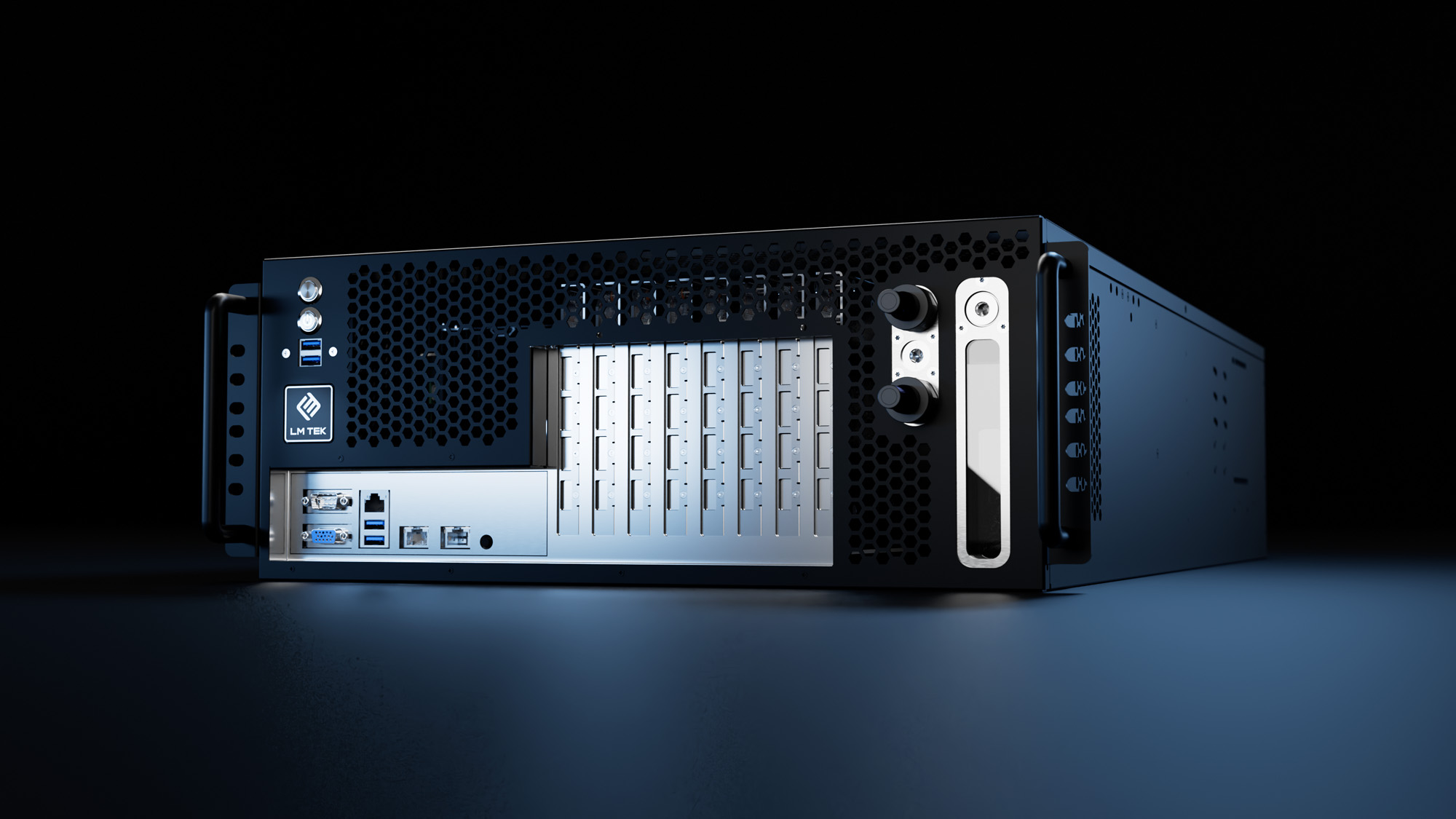
LM TEK 4U8GPU10KW
Eight GPUs in 4U with the cooling loop closed inside the chassis: no facility plumbing and no external CDU. You specify the board, CPUs, GPUs, memory and storage.
- Power
- 10 kW installed (5 × 2 kW); 8 kW sustained, N+1
Components and modification projects
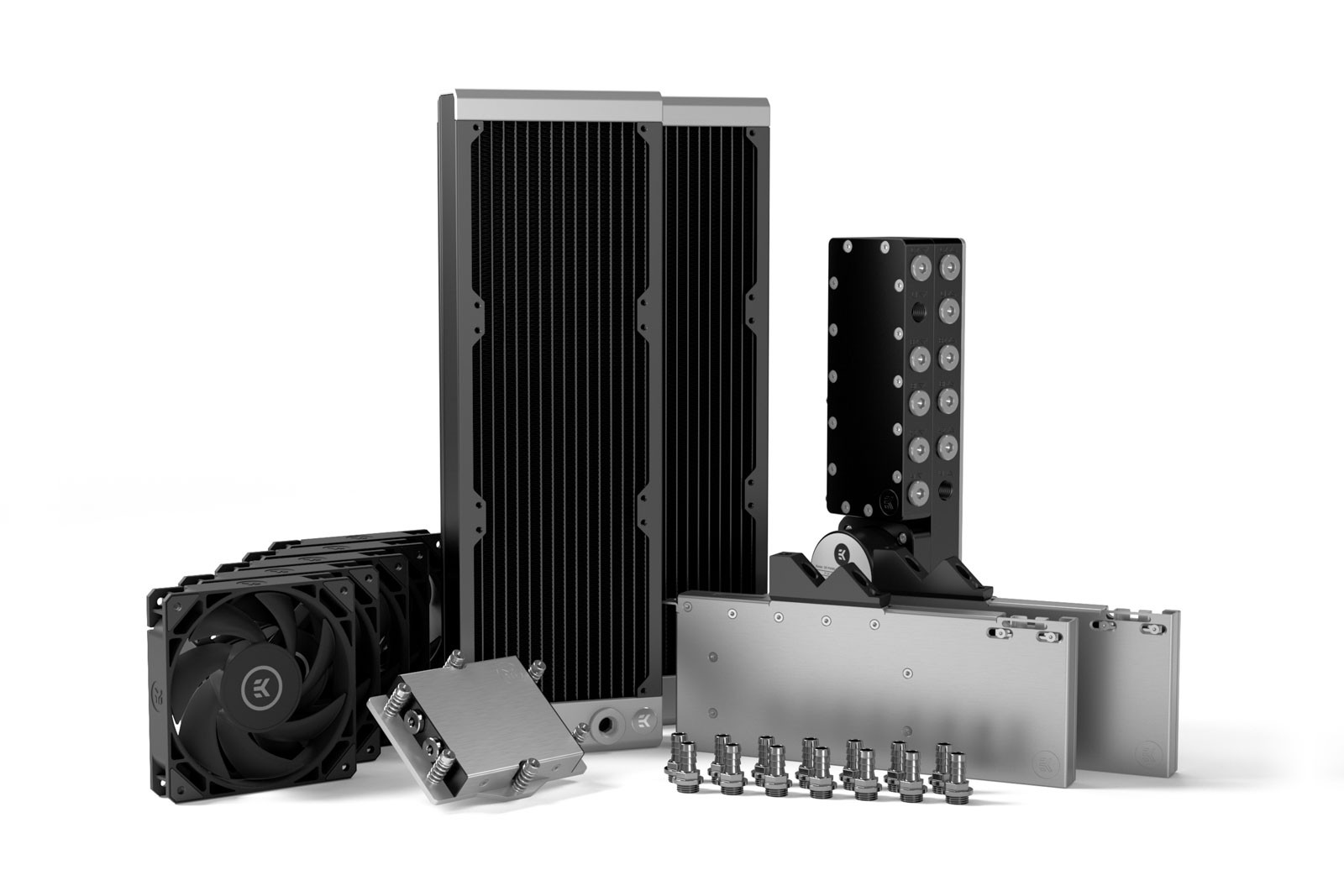
Components
Standalone liquid-cooling parts, and the parts that fit each LM TEK platform: water blocks, radiators, pumps and reservoirs, manifolds, fittings and coolants.
- Engineering specifications for every part
- Compatibility by CPU, GPU and platform
Modification projects
If your application needs more than the standard platform, such as a different enclosure, integration or thermal approach, Custom Engineering can modify it.
Start a modification project →Ready to plan a workstation?
Tell us about your project and we can connect you with the right system integrator for your needs.