Prevod v pripravi Ta stran še ni v celoti prevedena v slovenščino. Vsebina je trenutno prikazana v angleščini. Odpri angleško različico →
The problem frame

Between the AI factory
and the server room,
a new tier of compute.

HPC and AI have changed what dense compute means and where it gets deployed. A modest team running modern workloads now needs the density that used to belong to hyperscale facilities - inside the budget, footprint, and operating environment of an ordinary business. The mass-market supply chain has not built for that. LM TEK exists to close the gap.

The bifurcation

Two worlds, and the gap between them.

For decades, dense compute meant one of two things. National labs and hyperscalers built bespoke facilities for it. Everyone else ran nineteen-inch racks at two or three kilowatts in air-cooled rooms. AI and HPC made that bifurcation untenable - and the middle never had a supplier.

The AI factory

Megawatt-scale facility

  • · Custom-built data centre, often dedicated to a single tenant
  • · Rooftop heat exchangers, dedicated power substation, building-level cooling plant
  • · Custom hardware end to end - chassis, racks, networking, sometimes silicon
  • · Capex measured in tens or hundreds of millions

The traditional server room

19″ rack · 2–3 kW per rack

  • · Room-level air cooling - raised floor, CRAC units, in-row exchangers
  • · Standard 19-inch racks at typical enterprise density
  • · Workloads sized to the facility, not the other way round
  • · No structural headroom for modern AI or HPC density

Between these two poles sits the customer with a modern AI or HPC workload, a real budget, an ordinary office or lab, and no appetite for building a data centre. The hardware industry has not built a product for that customer. We are.

The requirements

What the middle tier actually needs.

The deployment site is not a data centre. The cooling cannot be a building system. The ambient cannot be assumed cold. Three constraints that read as incremental on a spec sheet, and rewrite the architecture in practice.

01

Rack-scale density without a purpose-built room

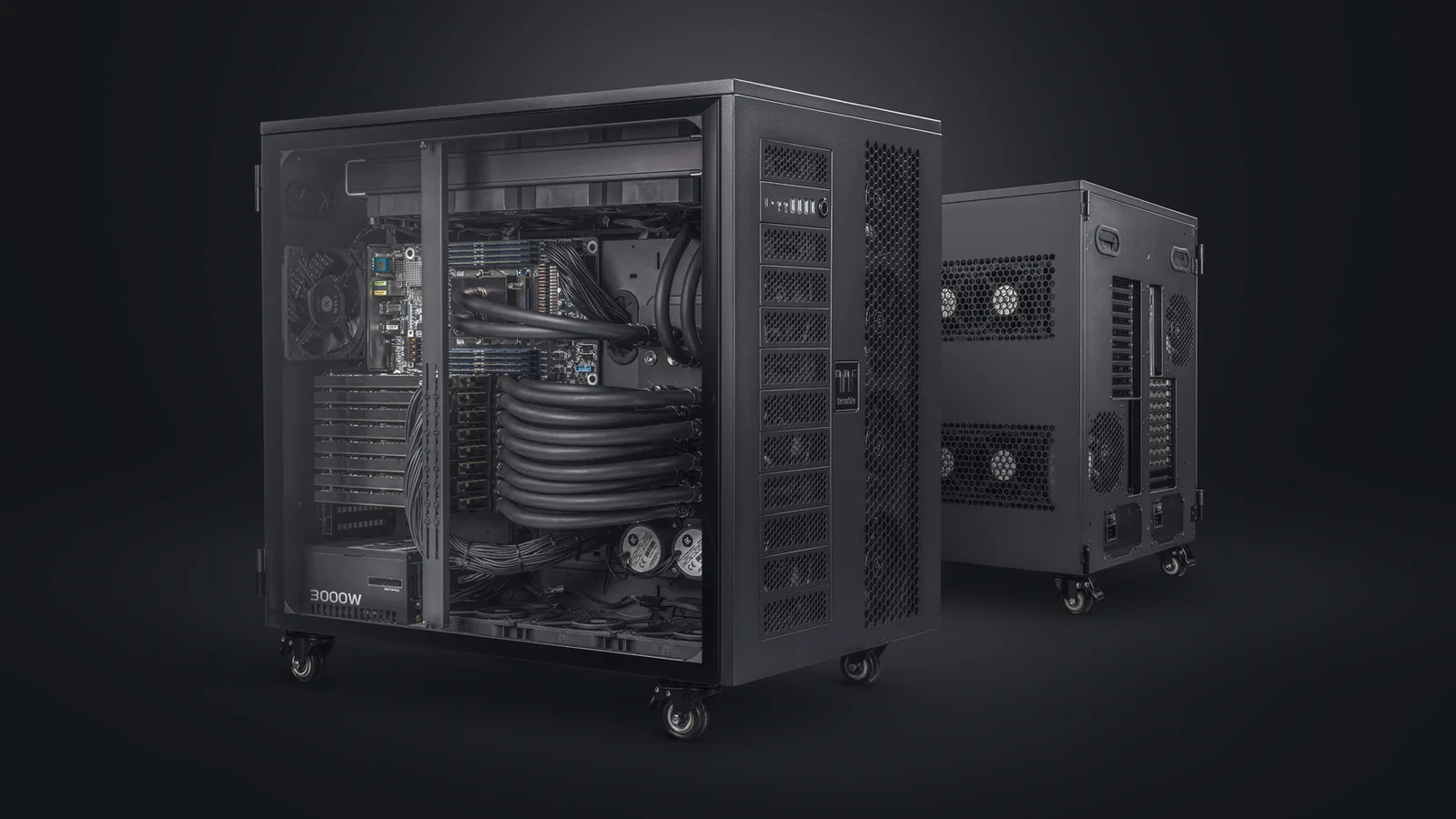
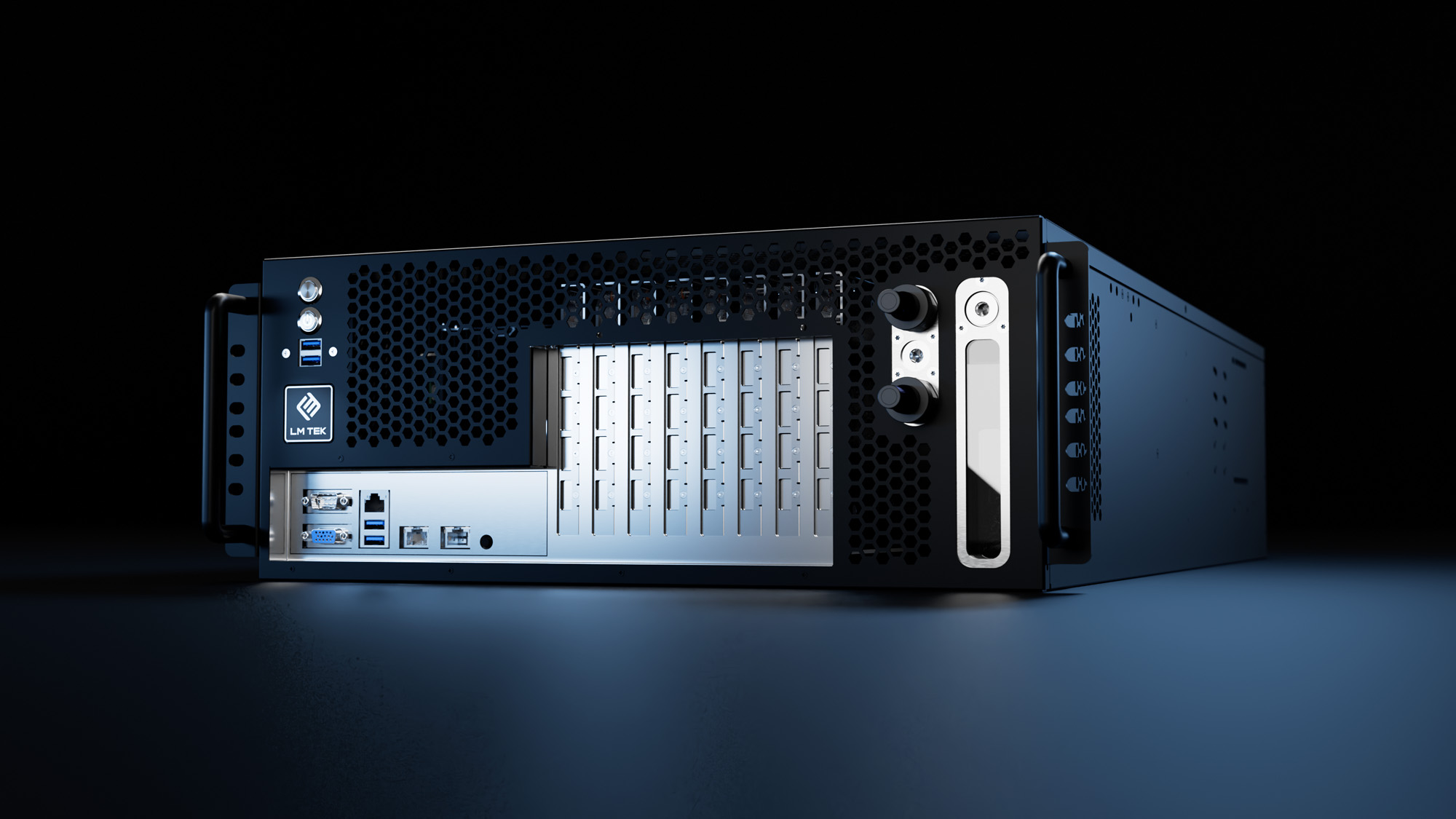
A modern 8-GPU server can draw ten kilowatts in a 4U chassis. The deployment site is rarely a data centre - it is an R&D wing, a clinical floor, an edge facility, a customer office. The hardware has to bring its own thermal infrastructure with it, not assume the building does.

Reference density

10 kW / 4U

02

Cooling without a rooftop heat exchanger

Customers in this tier do not own their building and cannot install an external chiller plant. The cooling loop has to be self-contained - inside the chassis or inside the rack - and reject heat into the air the customer already has. That rewrites the cooling architecture, not just the spec sheet.

Chassis or rack-level

Closed-loop

03

Ambient tolerance where air cooling gives up

Hyperscale data centres curate inlet air by design. The middle-tier site runs at whatever the building thermostat is set to - and frequently warmer. The thermal envelope has to hold in real-world ambients, the kind where conventional air cooling either throttles silently or stops being viable.

Inlet ambient, in the field

30 – 40 °C

The principle

Custom where it has to be.
Standard where it should be.

The hard part of engineering for this tier is not deciding what to build. It is deciding what not to build. The natural temptation in dense compute is to close the stack - custom motherboards, custom interconnects, custom everything - solving every problem and creating new ones in the process.

The custom-motherboard trade-off

A custom motherboard solves structural problems - power delivery, expansion, packaging - cleanly. It also closes the platform. Every component sourced through one channel. Every refresh, every upgrade, every scaling decision constrained to what one supplier chooses to keep manufacturing. For a hyperscaler the spend justifies the lock-in. For everyone else, it is the wrong trade.

The LM TEK position

Our platforms are built around components customers can buy on the open market - CPUs, GPUs, mainboards, memory, storage. The engineering layer - chassis, cooling, power distribution, thermal control - is what we own. The customer keeps the flexibility to purchase, scale, refresh, and replace through their own supply chain. The platform does not become a dependency.

LM TEK's role

The engineering layer that makes the middle tier deployable.

Liquid cooling, custom chassis, power delivery and distribution, thermal control - designed together as a single engineering problem, built around components the customer can buy without us. Available as professional workstations, dense racks, and where the deployment demands it, as a custom engagement.

LM TEK d.o.o. · Pod Lipami 10 · 1218 Komenda · Slovenija

Stopite v stik

Postanite partner LM TEK

Zahtevajte informacije

Odgovorili bomo v dveh delovnih dneh. Vaši podatki ostanejo pri LM TEK in se ne delijo s partnerji, dokler ne potrdite predstavitve.

Zahtevajte ponudbo